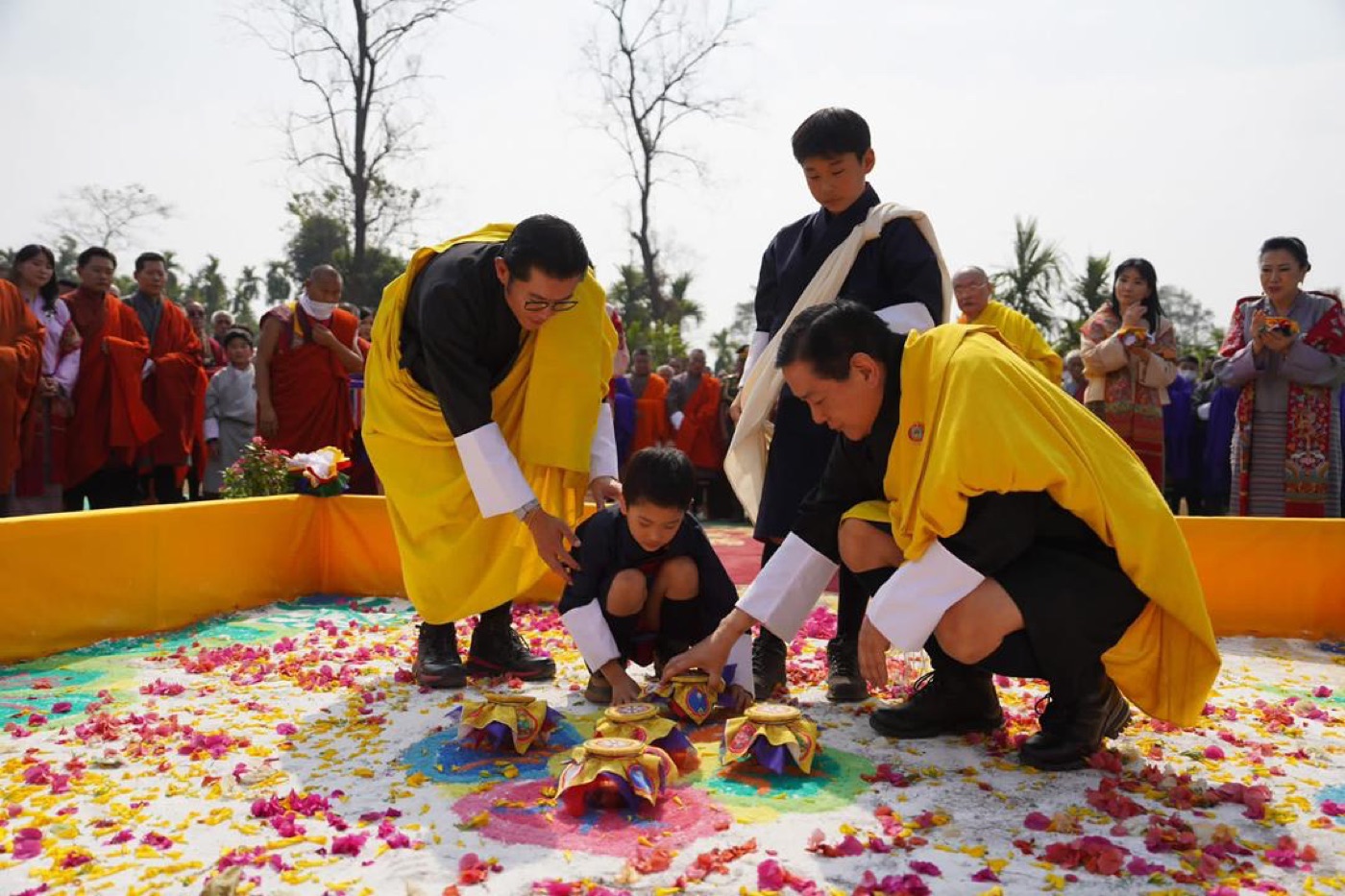
The Gelephu Chorten is a monumental Buddhist chorten (stupa) under construction in Gelephu Mindfulness City (GMC), in southern Bhutan. Rising about 80 metres, it is the largest and most prominent of the sacred structures planned for the city and is intended as a landmark of Vajrayana Buddhism. It was commanded by King Jigme Khesar Namgyel Wangchuck in 2023 and its ground was broken in a royal ceremony on 21 February 2026.[1]
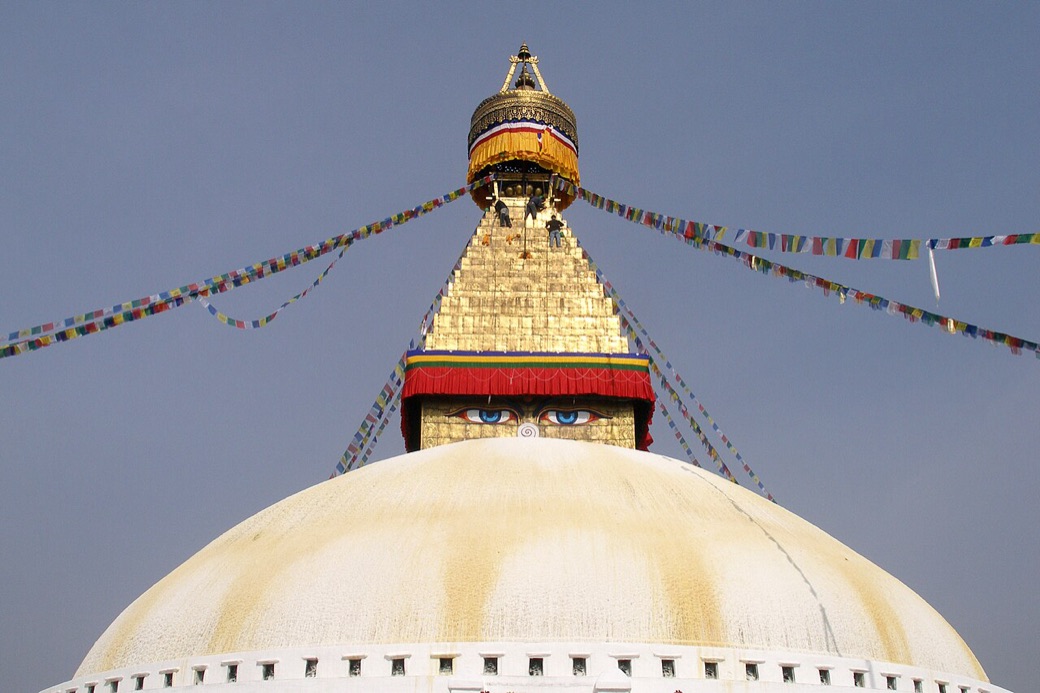
The chorten is explicitly modelled on the Jarung Khashor Stupa of the Kathmandu Valley in Nepal — better known today as Boudhanath, a UNESCO World Heritage site and one of the most recognisable Buddhist monuments in the Himalayas. Sited where the Himalayan foothills meet the plains, it is described by the GMC authorities as "an elevated altar where the great Himalayas spread into the vast Indo-Gangetic plains".[2] It forms the centrepiece of GMC's wider spiritual-projects programme, which also includes the Project 108 chortens and the Ugyen Norlha Chorten.
Commissioning and groundbreaking
His Majesty commanded the construction of the Gelephu Chorten in 2023, the same year the Gelephu Mindfulness City project was unveiled. The formal groundbreaking (salhang tendrel) took place on 21 February 2026 — the King's 46th birthday — at a ceremony attended by three generations of the royal family: His Majesty the King, his father the Fourth Druk Gyalpo Jigme Singye Wangchuck, and the young Gyalsey (crown prince), together with Queen Jetsun Pema, the Queen Mothers and His Holiness the Je Khenpo.[3] The same day saw the consecration of the nearby Ugyen Norlha Chorten, and more than 12,000 volunteers took part in the day's communal work along the Mau Chhu.[4] Some accounts relate the planned height of 80 metres to the 80 years of the Buddha's earthly life.[5]

Design and inspiration
The Gelephu Chorten follows the form of the Jarung Khashor / Boudhanath stupa — a great white hemispherical dome on a stepped terraced base, surmounted by a gilded spire bearing the all-seeing eyes — but on a monumental scale. The choice of model is deliberate: Boudhanath is among the most venerated pilgrimage stupas of the Himalayan Buddhist world, and the Gelephu Chorten is presented as carrying that lineage forward into a new setting.[5]
The Jarung Khashor lineage
According to the traditional account retold by the GMC authorities — drawn from terma (treasure) literature and the teachings of Buddhist masters — the Jarung Khashor stupa originated with a poor poultry-keeper in the Kathmandu Valley who, having raised four sons, petitioned the king for land to build a chorten for relics of the previous Buddha, Kashyapa. The king's spontaneous assent — "let it be done" (Tibetan jarung) — gave the stupa its name (kashor, "slip of the tongue").[2]
In the same tradition, the merit of building the stupa shaped later rebirths central to Himalayan Buddhism: the woman's sons are identified with King Trisong Detsen, the abbot Shantarakshita, Guru Padmasambhava (Guru Rinpoche) and a uniting minister, who together founded Samye, Tibet's first monastery. The lineage is traced onward to Pema Lingpa, the great Bhutanese treasure-revealer born in Bumthang in 1450, and through his descendants to the ancestry of the Wangchuck dynasty. Bhutan's first king, Ugyen Wangchuck, sponsored a major early-20th-century reconstruction of the Boudhanath stupa, and King Jigme Khesar Namgyel Wangchuck visited Jarung Khashor in 2024. The Gelephu Chorten is framed as the continuation of this centuries-long thread.[2] As with much oral and terma tradition, these genealogical and rebirth claims are matters of religious belief rather than independent historical record.
Significance
The Gelephu Chorten anchors the spiritual identity of Gelephu Mindfulness City, the Special Administrative Region conceived as a place where economic development and Buddhist values coexist. As the largest single sacred structure in the GMC programme, it is intended both as a place of pilgrimage and as a visible statement of the project's grounding in Bhutan's religious heritage.[3]
References
- "HM graces salhang tendrel ceremony of Gelephu Choeten". Kuensel.
- "Perspective: The Gelephu Chorten – Spirituality Reborn". Bhutan Broadcasting Service.
- "Royal Presence Marks Sacred and Strategic Milestones for Gelephu Mindfulness City". Daily Bhutan.
- "Bhutan's Royal Family Attends the Inauguration of the Ugyen Norlha Chorten". New My Royals, February 2026.
- "Gelephu Chorten, A Monumental Stupa Inspired by Jarung Khashor". Bhutan Pilgrimage.
- "The Gelephu Chorten – Spirituality Reborn". Gelephu Mindfulness City Authority (primary source).
Related articles
Know something about this topic? Edit this article or . Anonymous contributions welcome — no account required.