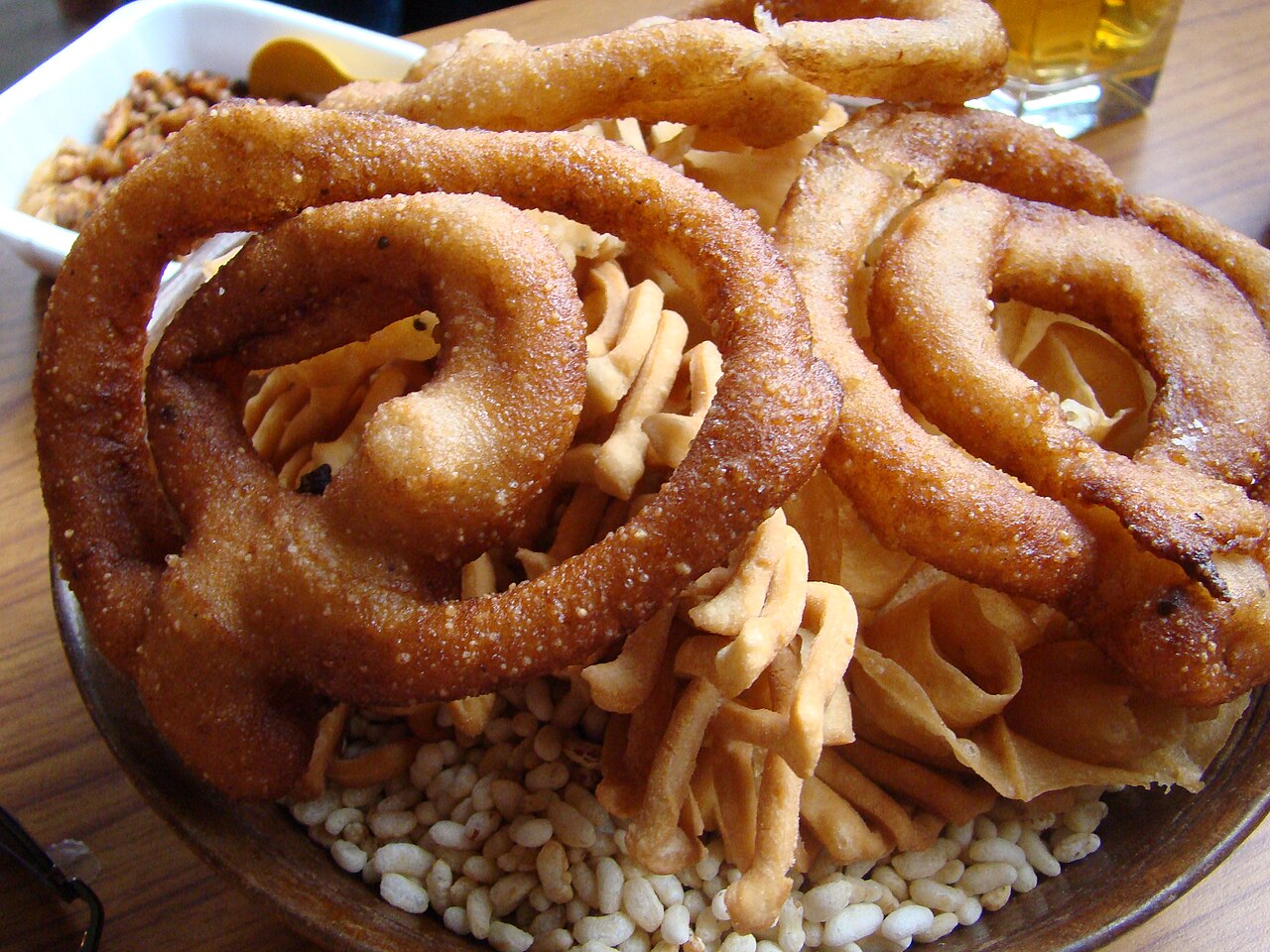

Selroti — also written sel roti, from the Nepali words sel (ring) and roti (bread) — is a traditional ring-shaped sweet fried bread that occupies a central place in the food culture of the Lhotshampa community of southern Bhutan. Crisp on the outside, soft and slightly chewy within, with a golden colour and the warm fragrance of cardamom and ghee, selroti is among the most distinctive foods in the Nepali-speaking Himalayan world. A professor at Nepal Sanskrit University has estimated the dish to be over 800 years old, placing its origins deep in the medieval foodways of the Himalayan foothills. In Bhutan, selroti is inseparable from the celebration of Dashain and Tihar, the two most important Hindu festivals observed by the Lhotshampa community, and from the rituals of hospitality and gift exchange that accompany those festivals.
Preparation
The making of selroti is a skilled and labour-intensive undertaking, traditionally the domain of experienced women in the household who begin preparations days before the festival. The process begins with soaking rice — ideally a fine-grained variety — overnight or for at least several hours. The soaked rice is then ground into a smooth, thick batter, either on a traditional stone grindstone or, in contemporary households, using a wet grinder or blender. To this batter are added sugar (adjusted to taste, but typically generous), ghee (clarified butter), cardamom for fragrance, and sometimes a small amount of fennel or banana for flavour variation.
The batter is left to ferment and rest for between one and eight hours, depending on the ambient temperature and the preferred flavour profile. This fermentation step is crucial: it develops the characteristic slight tang of properly made selroti, improves the porosity of the bread, and produces the light, spongy interior texture that distinguishes a well-made selroti from a dense, heavy one.
To cook the selroti, the batter is poured in a circular motion — a ring roughly 15–20 centimetres in diameter — into a deep pan of hot oil. The concentric ring shape is formed by the practised movement of the cook's wrist, making the shaping of selroti a skill that requires significant practice to master; novices typically produce irregular rings that lack the uniform cross-section of an expertly made piece. The bread is fried in hot oil until golden and set on both sides, then drained on a rack. When freshly made, selroti is at its most flavourful; however, it can be stored at room temperature for up to three weeks, a practical quality important for festival distribution and long-distance gifting.
Cultural Significance
Selroti is far more than food. During Tihar — the festival of lights celebrated by the Lhotshampa in October or November — selroti is prepared as a prasada (sacred offering) to the goddess Lakshmi. The ring shape is understood to symbolise prosperity, continuity, and the unbroken cycle of the year. Households make large quantities, sufficient to offer to deities, to distribute to relatives and neighbours who visit during the festival, and to send as gifts to family members living elsewhere. In an era when Bhutanese Lhotshampa are scattered across the world following the refugee crisis of the 1990s, selroti exchanged across borders has become a powerful symbol of cultural continuity and connection to home.
During Dashain, selroti appears alongside other ceremonial foods as part of the elaborate feast that accompanies the goddess Durga's victory over the demon Mahishasura. As a Hindu ceremonial food, it is offered alongside fruits, flowers, and other ritual items at household altars. The act of preparing selroti together — women of different generations working side by side — is itself understood as a form of cultural transmission, the skills and social knowledge of the community passing from mother to daughter through the medium of the kitchen.
Within the Bhutanese diaspora in the United States, Australia, and other countries of resettlement, selroti has become one of the most visible markers of community identity at festivals and community gatherings. Its preparation and sharing signal belonging and cultural pride in communities navigating the challenges of cultural maintenance far from their place of origin.
References
Related articles
Know something about this topic? Edit this article or . Anonymous contributions welcome — no account required.