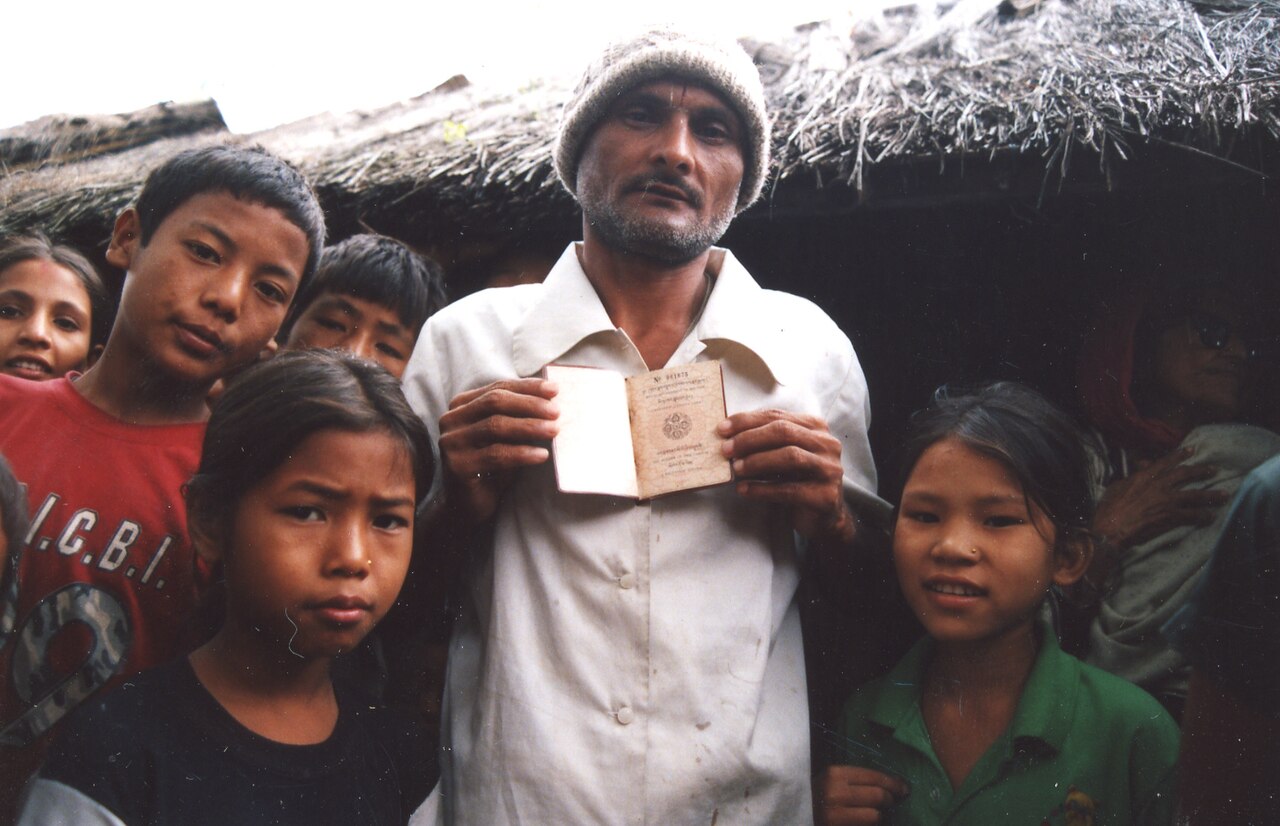

Beldangi III Refugee Camp, also referred to as Beldangi Extension, was the smallest of the three camps in the Beldangi complex in Jhapa district, Nepal. Established in 1993, it was created to absorb the continued flow of Lhotshampa refugees who arrived after Beldangi I and Beldangi II had reached capacity. At its peak, Beldangi III housed approximately 10,000 registered refugees.[1]
Despite its designation as an "extension" camp, Beldangi III developed its own distinct community identity over its two decades of existence. It shared administrative coordination, school systems, and healthcare networks with the other Beldangi camps while maintaining its own Camp Management Committee and internal governance structures. Together, the three Beldangi camps constituted the core of the Bhutanese refugee population in Nepal.[2]
History and Establishment
By late 1992, the existing camps in Jhapa district were struggling to accommodate the continuing arrival of refugees. The expulsion of Lhotshampa from Bhutan, which had begun in 1990, continued through 1993, with families arriving in Nepal after harrowing journeys through Indian territory. Many of those who arrived in 1993 had been among the last to leave, often having endured extended periods of harassment, detention, and forced labor before their departure from Bhutan.[3]
UNHCR negotiated access to additional land near the existing Beldangi camps, and Beldangi III was established in early 1993. The camp was laid out on a smaller footprint than its predecessors, resulting in higher population density. This density, combined with the later establishment date, meant that Beldangi III often received fewer resources per capita than the older, more established camps — a source of tension that camp leaders regularly raised with UNHCR and implementing partners.[4]
Demographics
Beldangi III's population was demographically similar to that of the other Bhutanese refugee camps: predominantly Lhotshampa, with a mix of castes and communities from the southern Bhutanese districts. The camp included a notable proportion of late arrivals — families who had delayed departure hoping that conditions in Bhutan would improve, or who had been held in Bhutanese detention before being released and expelled. These later arrivals often bore the most acute physical and psychological scars of the expulsion process.[4]
As in the other camps, a growing proportion of the population consisted of children and young people born in exile. By the mid-2000s, the camp's median age was notably young, creating both challenges and opportunities. The youth demographic drove demand for education and vocational training while also contributing to frustrations about the lack of employment prospects and the indefinite nature of their displacement.[1]
Living Conditions
Living conditions in Beldangi III mirrored those across the camp system, though the higher density created additional pressures. Shelter plots were smaller than in Beldangi I and II, and communal facilities — water points, latrines, and cooking areas — served more people. The camp's location on lower-lying ground made it particularly vulnerable to monsoon flooding. During heavy rains, sections of the camp became waterlogged, forcing temporary relocations within the camp boundaries.[2]
Humanitarian agencies provided the same basic services as in other camps: food rations through WFP, water and sanitation through UNHCR implementing partners, and non-food items on a periodic basis. Community vegetable gardens were particularly important in Beldangi III, where residents cultivated small plots around their shelters to supplement the monotonous camp diet. Some residents raised small livestock — chickens and goats — though space constraints limited this practice.[5]
Education
Beldangi III operated its own primary schools within the camp, staffed by refugee volunteer teachers. The schools followed the same curriculum used across the Beldangi complex, a modified version adapted from both Bhutanese and Nepali educational standards. Students who completed primary education at Beldangi III could attend secondary schools at the larger Beldangi I campus.[1]
Adult education and vocational training programs were available, though on a smaller scale than at the larger camps. Women's literacy programs were particularly valued, as many older women from rural southern Bhutan had limited formal education. These programs served a dual purpose: building practical skills and providing a structured activity that combated the psychological toll of prolonged displacement.[1]
Healthcare
A small health post within Beldangi III provided basic primary care, staffed by trained refugee health workers. More complex cases were referred to the health center at Beldangi I or to district hospitals. Preventive health programs including immunization, antenatal care, and health education were conducted through community health volunteer networks — a system that proved highly effective in maintaining public health despite the challenging conditions.[1]
The camp experienced periodic disease outbreaks, particularly of diarrheal diseases during monsoon season and respiratory infections during winter. Malaria control was a constant concern in the Terai lowlands. Mental health challenges — depression, anxiety, post-traumatic stress, and substance abuse — were widespread but often underreported due to stigma. Community-based psychosocial support programs provided some relief, though professional mental health services were limited.[4]
Resettlement
Beldangi III participated fully in the third-country resettlement program that began in 2007. The IOM established processing facilities and cultural orientation programs accessible to residents of all three Beldangi camps. Refugees from Beldangi III underwent the same screening, medical examination, and cultural orientation process as those from other camps before departure to resettlement countries.[1]
Given its smaller population, Beldangi III was among the first camps to see a dramatic reduction in numbers. As the population shrank, services were progressively consolidated with the other Beldangi camps. Schools, health facilities, and administrative functions were merged, and remaining residents were eventually relocated to the consolidated Beldangi settlement.[1]
Current Status
Beldangi III was officially closed as a separate camp entity as its population was absorbed into the consolidated Beldangi settlement. The physical site was returned to its landowners. The camp's existence — from its establishment in 1993 through its closure — traced the full arc of the Bhutanese refugee crisis: from emergency displacement through protracted exile to the bittersweet resolution of third-country resettlement.[1]
Former residents of Beldangi III are now part of Bhutanese diaspora communities worldwide. Their story, like that of the broader Lhotshampa exile, illustrates both the devastating human cost of ethnic exclusion and the capacity of displaced communities to maintain dignity, educate their children, and rebuild their lives under the most challenging circumstances.
References
- UNHCR. "Bhutanese Refugees." https://www.unhcr.org/asia/bhutanese-refugees
- UNHCR. "Bhutanese Refugees Mark 20 Years in Exile." https://www.unhcr.org/us/news/stories/bhutanese-refugees-nepal-frustrated-lack-progress
- WRITENET / Refworld. "The Exodus of Ethnic Nepalis from Southern Bhutan." 1995. https://www.refworld.org/reference/countryrep/writenet/1995/en/33123
- Human Rights Watch. "Trapped by Inequality: Bhutanese Refugee Women in Nepal." 2003. https://www.hrw.org/reports/2003/nepal0903/
- World Food Programme. "Nepal." https://www.wfp.org/countries/nepal
Related articles
Know something about this topic? Edit this article or . Anonymous contributions welcome — no account required.